

Trip Highlights
Immerse yourself in the wildlife, culture, and unique ecosystem of the Galapagos as we hike, bike, kayak, and snorkel our way across the archipelago.
Spend the week snorkeling with curious sea lions, grazing sea turtles, majestic rays, and an abundance of tropical fish while visiting each of the four inhabited islands. We begin with a downhill bike ride through the San Cristobal Highlands, learning about the local vegetation before jumping into the water for our first snorkel at the incredible Kicker Rock. Hike up an active volcano to one of the largest calderas in the world on Isabela Island, paddle through Isabela’s beautiful bay on a coastal kayak, and dine on a black sand beach on the mysterious Floreana Island. Blue-footed boobies, marine iguanas, and frigatebirds populate each island, and up-close encounters are common—so keep your camera handy.
Along the way, visit historical and educational sites on each island to learn about human settlement and the many conservation programs working to protect this delicate environment through research, education, and sustainable tourism. Stay in locally owned hotels and dine in restaurants that take you off the beaten path and into the heart of Galapagos culture.
No trip is complete without observing giant tortoises in their natural habitat, which we do just before strolling through an ancient lava tunnel.
Experience the Galapagos alongside the animals, the locals, and the ever-changing landscapes in this unforgettable 10-day adventure.
Sample Itinerary
Galápagos Island Adventure Sample Itinerary
Day 1: Arrival and Welcome Dinner
This evening, a representative meets the group for a briefing about the upcoming adventure and an opportunity to get to know your travel mates before your first dinner together.
If you arrive early, use your free time to get acquainted with Quito, one of the highest capital cities in the world, sitting at just over 9,000 feet above sea level. The city is nestled in a long, narrow valley of the Andes and is flanked by the Pichincha Volcano to the west. For a great view and a little exercise, Pichincha is easily accessible for a day trip.
If you’re in a cultural mood, head to the Old Town to stroll through magnificent cathedrals and take in the colonial architecture of this UNESCO World Heritage Site. El Panecillo, or the Little Bread Loaf, sits high atop a hill in the Old Town and offers a panoramic view of the city. Museums are scattered throughout the New and Old Town, along with local artisan markets that are great for picking up souvenirs. The New Town is full of cafes and restaurants and brings together a vibrant mix of locals, expats, and fellow travelers. Both areas are easily accessed by trolley or taxi.
If you’d like support arranging any pre-tour activities or accommodations for an early arrival or extended stay, we’re happy to help.
NOTE: Like many urban areas, Quito has its share of petty theft. Keep valuables and passports in your hotel safe and only carry essentials.
Accommodation: EB Hotel or similar
Meals Included: Dinner
Day 2: San Cristobal and Scenic Biking
This morning, take a short flight to one of the oldest islands in the Galapagos archipelago, San Cristobal. Land in Puerto Baquerizo Moreno, a coastal town and the administrative capital of the islands. After sampling some of the local cuisine, head up into the highlands for a scenic downhill bike ride. Starting at a panoramic viewpoint called La Soledad, bike through the tiny town of El Progreso and pass through five different vegetation zones until reaching a beach called La Loberia. There, watch sea lions sunbathe, play, and vie for your attention. If you can’t wait to get in the water, this is your first opportunity.
As the sun sets, bike back to town and prepare for a welcome dinner of fresh fish and island cuisine at a small local restaurant.
Accommodation: Hotel Seaside or Hotel Casa Blanca
Meals Included: Breakfast, Lunch, and Dinner
Day 3: Water Adventures and Exploration
Today, take to the water to get a glimpse of the underwater world of Galapagos. First, cruise along the coast in the boat, identifying shore birds like the Great Frigate and the famous Blue-Footed Booby. Then, anchor in some calm waters and get your fins wet in search of damselfish, pufferfish, and, hopefully, curious sea lion pups.
From there, continue to Kicker Rock, or Leon Dormido as it’s known by the locals, to explore the final remains of a tuff cone rising over 143 meters out of the ocean. If Kicker Rock were a building, it would have almost 50 floors! Along the edge and through a channel of this drastic compact ash formation, be on the hunt for sea turtles, spotted eagle rays, chocolate chip starfish, and, with any luck, a Galapagos Shark or two. Don’t worry; they won’t be as interested in you as you are in them.
A beautiful beach, accessible only by boat, is the final stop for the day. After lunch on board, feel free to spend your time swimming in the turquoise water or snapping photos of Kicker Rock in the distance.
Head back to town late afternoon to visit the Interpretation Center where you’ll learn about the history and mystery of the archipelago, from its discovery and what makes it so special, to Charles Darwin’s visit and the present-day efforts to protect this amazing World Heritage site. There’s a short hike to Tijeretas, a panoramic lookout over the town and Kicker Rock, for those interested.
To culminate the educational afternoon, pick a spot at nearby Playa Mann, or Mann Beach, with the playful sea lions, or grab a front-row seat at Casa Blanca to toast the sunset. Dinner is on your own tonight, and plenty of suggestions are available.
Diving: The option to dive is available. Please inquire in advance.
Accommodation: Hotel Seaside or Hotel Casa Blanca or similar
Meals Included: Breakfast and Lunch
Day 4
After breakfast, depart by boat for the least inhabited of the main islands, Floreana. On route, keep your eyes peeled for dolphins, whales, and the waved albatross. Have a pre-lunch snorkel before going ashore to a black sand beach at the home of the Witmers, one of the island's first settlers. With a population of fewer than 150 people, Puerto Velasco Ibarra is a sleepy little town but not without its secrets. You can read up on how life came to be on Floreana and how some lives mysteriously ended.
After lunch, take a siesta while listening to the waves, or walk along the coast in search of sunbathing iguanas. This afternoon, bus up to the highlands to visit the Pirate and Whaler Caves from long ago.
Return to town and your beachside accommodation in time to enjoy the day’s last light before heading to dinner. After dinner, on the way back to the hotel, be sure to spend a few moments looking up—Floreana is one of the best places for stargazing!
ACCOMMODATION: Wittmer Lodge or similar
MEALS INCLUDED: Breakfast, Lunch, Dinner
Day 5
This morning, have a chance to go for one last walk along Floreana’s coast before embarking for Isabela, the largest island in the archipelago. Once arriving in Puerto Villamil, check in, have lunch, and then head off for a kayak around the sheltered bay area of Puerto Villamil. Galapagos penguins (the only penguin found north of the equator), sea turtles, and rays frequent these shallow waters, and blue-footed boobies, frigate birds, and pelicans may be seen resting along the shore and in some nearby mangrove trees.
An easy walk around some aa lava fields and a fun snorkel with curious Galapagos creatures are in store this afternoon. Head over to Las Tintoreras, first enjoying a bit of a boat tour around the bay, searching for penguins!
Walking around Tintoreras, you're greeted by an abundance of marine iguanas. This is an important nesting site for them, so be sure to stick to the trail. Juvenile marine iguanas, as well as adults that are often brightly colored, are seen here. In some of the calm channels you walk by, you may also see sleeping sharks.
Putting on your fins and masks, a dip in the water has you snorkeling with a wide range of aquatic animals. Be on the lookout for things like sea cucumbers, chocolate chip sea stars, and even Galapagos penguins.
ACCOMMODATION: Hotel Albemarle or similar
MEALS INCLUDED: Breakfast, Lunch, Dinner
Day 6
Lace up your hiking boots, we’re heading up a volcano! Sierra Negra Volcano is one of the most active volcanoes in Galapagos; its last eruption was in June 2018. As we hike to the perimeter of the caldera, we’re on the lookout for bird species found only in the highlands, like the bright red Vermillion Flycatcher and the elusive short-eared owl. Once we reach the rim, we’re met with a nine-kilometer view that stretches across one of the most active calderas in the world. We continue on to traverse the vast lava fields of Volcan Chico en route for a lookout that boasts breathtaking views reaching to the north of Isabela. After enjoying a hearty sense of accomplishment, we make our way back to town late afternoon for some free time to curl up with a book or venture down to the water for a relaxing swim before dinner.
ACCOMMODATION: Hotel Albemarle or similar
MEALS INCLUDED: Breakfast, Lunch
Day 7
Enjoy a free morning or take an add-on Snorkel Tour to Los Tuneles.
If you think sleeping sharks, sea horses, sea turtles, and strange lava tunnel formations sound intriguing, then you’re going to need your mask, snorkel, and flippers because you get all that and more at Los Tuneles.
Also called Cabo Rosa, this area, about one hour from town, was created when lava flows reached the ocean, forming tunnels, arches, and sheltered bays perfect for snorkeling. They also happen to be perfect feeding grounds for sea turtles and resting places for other species like Galapagos sharks! Even the cute Galapagos penguins have been known to visit this area at times. It is one of the most diverse snorkel spots in the entire archipelago, and also home to some birds, such as nesting blue-footed boobies.
The ride to get here can be a bit rough, and because of the lava formations, safe access is only possible at certain tides. If you want to maximize the time you spend in the water in the Galapagos, Los Tuneles should be on your list! We haven’t even mentioned that sea lions, eagle rays, octopus, and plenty of tropical fish, sea stars, and sea urchins are also spotted in these often crystal-clear waters!
After lunch, we visit the Giant Tortoise Breeding Center, where we see giant tortoises in all stages of development. The center has almost a thousand giant tortoises training for life on their own!
There is a nice mangrove-lined boardwalk path that brings us back to town from the center. Many birds, including flamingoes, call this area home.
Tonight, we meet back up for a well-deserved feast as it’s our last night in Isabela.
Note: *Snorkel Tour to Los Tuneles has an extra cost of $165 per person.
ACCOMMODATION: Hotel Albemarle or similar
MEALS INCLUDED: Breakfast, Lunch, Dinner
Day 8
We’ll wave goodbye to Isabela this morning as we depart for Santa Cruz. Once we arrive, the day’s first highlight is heading into the highlands to a private reserve where giant tortoises roam free. Expect to get some great photos of tortoises wallowing in mud pools, munching on vegetation, or even “running” across the fields in the highlands at full speed. The area often includes lava tunnels too—some large enough to walk through!
After lunch in the highlands, we’ll return to town for a visit to the Charles Darwin Research Station. Here, we’ll learn about the station’s work repopulating the islands with once-endangered land iguanas and several species of Giant Tortoise. From egg collection to the age of release, you’ll get a close-up look at how these iconic creatures are raised and readied for life in the wild.
The afternoon is yours to enjoy as you wish. Puerto Ayora is the biggest town in the Galapagos, with plenty of shops, cafés, and a scenic waterfront to explore. For those up for more adventure, an optional walk to Tortuga Bay is highly recommended. The beach is only accessible by foot—about 45 minutes on a flat, shaded path that’s great for spotting lava lizards and local birdlife.
The first beach you’ll reach has rough surf, perfect for surfing or bodyboarding, while a little further along lies Tortuga Bay—a calm, mangrove-sheltered lagoon ideal for swimming, kayaking, or relaxing in the sand. A nearby cactus forest trail offers one more chance to spot nesting blue-footed boobies and some of the largest marine iguanas around.
After your beach time, head back to town for our final group dinner and a toast to our time in the Enchanted Islands.
ACCOMMODATION: Hotel Solymar or Posada Del Mar or similar
MEALS INCLUDED: Breakfast, Lunch, Dinner
Day 9
Enjoy a bit of free time this morning before we head to the airport for your flight back to the mainland. Baltra Airport is located on a separate island, so reaching it requires a cross-island taxi ride on Santa Cruz, followed by a short ferry crossing and a bus ride—altogether, allow for up to two hours of travel time.
On the way, let us know if you’re craving one last good coffee! Time permitting, we’ll stop at a local distributor where you can grab a bag of freshly ground Galapagos Coffee—the only product exported from the islands and a great souvenir for home.
If schedules allow, we’ll also make a short visit to Los Gemelos, a pair of massive volcanic sinkholes nestled in the highlands. These unique geological formations are unlike anything else you'll have seen during your trip and are surrounded by lush Scalesia forest—a haven for finches and other endemic birdlife.
As you board the ferry across the channel to Baltra, take one last moment to soak in the turquoise waters and reflect on your island adventures. This evening, enjoy a final dinner back in Quito to close out an unforgettable journey.
ACCOMMODATION: EB Hotel or similar
MEALS INCLUDED: Breakfast, Dinner
Day 10
Today marks the final day of your Galapagos adventure. If you have a flight out before noon, we’ll make sure you get to the airport on time. For those with later departures, we’re happy to help arrange a day tour in and around Quito so you can squeeze in a bit more exploring before heading home.
Extend your vacation! Visit the lush Amazon rainforest, explore the grandiose heights of the Highlands or walk through history in the Quito or Cuenca. Whatever your Ecuadorian adventure goals, our adventure consultants can make it happen!
MEALS INCLUDED: Breakfast
Travel Arrangements
Travel to Guayaquil, Ecuador
The easiest way to reach Guayaquil is by connecting through a U.S. city with direct flights, including New York (JFK), Miami (MIA), and Fort Lauderdale (FLL).
Airport Transfer Upon Arrival
An airport transfer is included in your package. Please provide your international flight details, and we will arrange transportation to your hotel in Guayaquil, where the tour officially begins.
If you have booked additional hotel nights or trip extensions, you will need to arrange your own transportation. The hotels we use offer complimentary shuttle services, and taxis are readily available at the airport.
Weather
The Galápagos has two main seasons: the cool, dry season from July to December and the hot, rainy season from January to June. The weather remains relatively temperate throughout both seasons, making it a great destination year-round.
The peak tourist season typically runs from mid-December to mid-January and mid-June to September. However, due to travel restrictions set by the Galápagos National Park Service, the islands never feel overcrowded, allowing visitors to enjoy the natural serenity of the archipelago.
When to Visit the Galápagos
Galápagos Dry Season (Garúa Season)
The dry season, known as garúa season, brings cooler temperatures and a shift in climate.
- Cold waters travel north from Antarctica, making the climate more subtropical than tropical.
- The misty garúa rains coat the island peaks, turning vegetation lush and green. Garúa translates to "drizzle" in English, a fitting name for this season.
- The Humboldt Current brings nutrient- and plankton-rich waters, attracting marine mammals, fish, and seabirds.
- The drizzle mainly affects the highlands, while the lowlands remain arid with excellent wildlife viewing.
- The sea is teeming with fish, making this an ideal time to observe seabirds and Galápagos penguins as they feast below the surface.
Galápagos Rainy Season
The rainy season lasts from January to June, with warmer air and water temperatures.
- January to March sees the heaviest rainfall, but storms are typically short-lived.
- Predominantly sunny days and warm waters from Colombia and Panama create perfect conditions for snorkeling.
- March to April offers the clearest weather and calmest seas, though there are fewer fish in the warm waters. More fish appear later in the year.
Getting Ready
Physical Requirements & Preparedness
At Adventure Unbound, our priority is ensuring you have a safe and enjoyable experience. While many of our trips are suitable for beginners, some require a higher level of physical activity. It's important to understand the physical demands of the trip you choose.
All of our trips involve active adventure and some level of physical exertion, with possible exposure to elements such as wind, rain, heat, sun, cold temperatures, and cold water. We strive to accommodate individuals with physical limitations, disabilities, and medical conditions. If you require additional assistance, please speak with your Adventure Consultant. We also recommend consulting your doctor if you have any health concerns that could impact your participation.
In general, all participants must be able to:
- Wear all required safety and protective equipment.
- Load and unload from transportation vehicles independently or with assistance from a qualified companion.
- Access water entry and exit points on their own or with assistance.
- Enter and exit a raft, kayak, or inflatable kayak independently or with aid.
- Remain seated and balanced in a floating watercraft, with adaptive equipment if needed.
- Float on their back in moving or still water, turn from face-down to face-up with a Personal Floatation Device, and hold their breath underwater if necessary.
- Remain calm and maintain controlled breathing in the event of a swim.
- Climb back into a kayak with assistance if an unexpected swim occurs.
- Swim toward a shoreline or boat in moving water and exit the water independently.
- Participate as an active paddler when instructed by the guide for the duration of the trip.
- Move about a campsite independently or with assistance on trips involving overnight camping or outdoor meals.
Physical Preparedness
Whether you're an experienced kayaker or a first-timer, our trips are designed to be accessible and rewarding. For beginners, kayaking is easy to learn in the sheltered waters we visit. We provide all necessary camping gear, kayaking equipment, and expert guidance to ensure your experience is both comfortable and enjoyable.
We also keep our group sizes small, allowing for a more intimate connection with nature and personalized attention from our guides. Our trips combine adventure, environmental conservation, and unique experiences, ensuring a truly memorable journey.
Packing List
Overview:
The packing list below is designed to help you plan, prepare, and outfit yourself for your upcoming Galapagos adventure. Our recommendations and suggestions are tailored to your tour type, based on the outlined itinerary, the unique geographic region, and our extensive knowledge of the Galapagos Islands. We encourage you to use this list as a guide and customize it with your favorite travel essentials!
Gear Provided by ROW Adventures
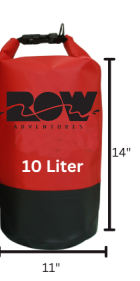
Adventure Unbound supplies all necessary equipment for your tour, including kayaking and snorkeling, you'll be provided with personal flotation devices (PFDs), paddles, kayaks, and one 10L dry bag for your day bag.
Additionally, we will provide a shorty wetsuit, snorkel mask, fins, and a PFD.
To make the most of your Adventure Unbound experience, we recommend traveling light. Packing lightly for Galapagos trips is essential for several reasons:
- Inter-island flights have a baggage limit of 25 pounds per person.
- You'll need to carry your luggage with you.
- You won’t require much for this adventure!
Luggage Recommendations for You Galapagos Adventure
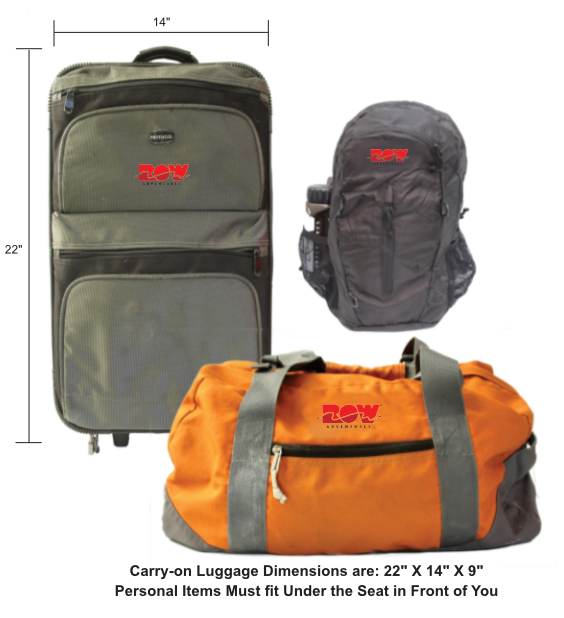
We recommend avoiding checking luggage whenever possible. If you must check a bag, be sure to pack essential or hard-to-replace items in your carry-on. During the trip, you'll use three main bags, plus an optional additional bag. Here's a breakdown:
Duffel Bag or Roll-On (Carry-On Size): This should meet carry-on requirements. If you prefer not to carry a duffel through airports, pack a light duffel inside a roll-on bag. In Guayaquil, you can transfer the items you need for the Galapagos into the duffel and leave the roll-on at the hotel. On your return flight, this same duffel can be used for souvenirs. We recommend a medium-size duffel that fits within carry-on limits. If you prefer, you can use the roll-on bag instead, but keep in mind that wheels add extra weight.
Small Day Pack: This is considered your carry-on “personal item.” We suggest a pack measuring about 18” high x 12” wide x 8” deep, with additional outside pockets of about 2” deep. This bag is perfect for carrying medications, books, games, and other essentials during the flight. In Ecuador, it's ideal for holding items you'll need during the day—whether kayaking, hiking, or exploring towns.
Dry Bag (Provided by ROW): This small bag will be used for your sea kayaking in the Galapagos. It holds items like your rain gear, sunscreen, sun shirt, binoculars, and camera—things you'll want to keep handy while on your kayak. The dry bag sits on top of your kayak for easy access throughout the day.
Optional “Wet Gear Bag”: This is for those who prefer an additional option to separate wet gear. The bag is optional, but it can be useful for storing items that you don't want to mix with dry items during the trip.
Essentials
- Passport – Must be valid for at least six (6) months after your arrival date.
- Money Belt – Securely carry your passport, travel documents, and cash in a concealed money belt.
- Photocopy of Passport – Keep a photocopy of your passport in a ziplock bag stored separately in your luggage. Leave a copy with family or friends at home as an additional precaution.
- Air Tickets – Carry a printed copy of your air tickets, including ticket numbers, stored separately in your luggage.
- Cash – Bring $200 for the Galapagos National Park fee and $20 for the Isabela Island Arrival Tax.
- Gratuities – Set aside cash for tips (details provided in your trip documents).
- Credit/Debit Cards – Ensure your card is internationally accepted and has chip technology. Notify your bank of your travel plans to avoid fraud detection holds.
- Battery Pack/Power Bank – Essential for charging devices while camping where electrical outlets may not be available.
- Watch or Travel Clock – A phone with an alarm function can also suffice.
- TSA-Approved Lock – Use for securing luggage when it’s not on your person (optional).
- Lightweight Clothing – Pack quick-drying nylon or polyester materials. On Isabela Island, hotels offer laundry services, or you can hand-wash clothes in the sink.
Clothing
- 1 pair of lightweight nylon pants (zip-off legs are a versatile option).
- 1 additional comfortable pair of pants or a skirt (wear one item on the plane).
- 1 pair of nylon shorts (men can use them as swimwear).
- 1 swimsuit for women.
- 2 T-shirts or polo shirts.
- 1 pair of lightweight pajamas.
- 1 short-sleeve button-up shirt (nylon or poly-cotton).
- 1 long-sleeve shirt for sun protection (tight-weave nylon shirts with SPF protection are ideal).
- 1 long-sleeve button-up shirt for town (pack in a ziplock bag to minimize wrinkles).
- 1 lightweight fleece or polyester sweater/jacket for cool mornings and evenings.
- 3–4 pairs of underwear.
- 1 wide-brim, tie-on hat (floppy nylon hats pack well; a baseball cap and bandana also work).
- 1 lightweight raincoat or windbreaker with waterproof qualities.
- 3 pairs of light socks and 1 thicker pair for hiking.
- 1 pair of sturdy sandals with ankle straps for kayaking, beaches, and town walks (Chaco, Teva, or similar brands).
- 1 pair of sturdy tennis shoes or lightweight hiking boots if extra ankle support is needed.
Water Gear
- 1 pair of paddling gloves (optional, for blister prevention; fingerless bike gloves work well).
- 1 Lycra “rash guard” shirt (optional, adds warmth and helps with wetsuit ease).
- Snorkel Gear – Mask, fins, snorkel, and wetsuit are available to borrow at no cost (not counted in your weight allowance).
Additional Gear
- Lip balm with sunscreen for daily use.
- Sunglasses (polarized lenses are excellent for wildlife viewing).
- Headstrap for glasses or sunglasses (e.g., Chums or Croakies).
- Extra sunglasses or prescription glasses.
- Flashlight or headlamp (headlamps are ideal); include extra batteries and bulbs.
- 1 wide-mouth water bottle.
- Water filtration system - Bringing this along will help reduce our use of single use plastic. Ecuador has nearly perfect tap water that can be easily filtered so it wont upset your bodys system. We recomend you bring a filter such as a LifeStraw, Grayle, Steripen, or Sawyer Squeeze
- Compact towel for camping (beach towels are provided on snorkel boats).
- Bandana for sun protection or cooling off.
- Small sewing kit (optional).
- Travel-sized detergent for handwashing clothes (3–4 oz.).
- Plastic bags: Four or five 11-gallon kitchen garbage bags (for wet clothes or dirty shoes) and a few 1-gallon ziplock bags for packing lotions or other items prone to spills.
- Camera equipment, including a waterproof camera or GoPro for snorkeling and extra memory cards/batteries.
- Binoculars (optional but great for bird and wildlife watching).
- Books, a notepad, pen, and small games (e.g., playing cards).
Toiletries and First Aid
- Basic hygiene products: toothbrush, toothpaste, deodorant, etc. (keep liquids under 3.38 oz./ 100ml for carry-on).
- Insect repellent (lotion or oil; spray is not permitted) – While biting insects in the Galapagos are generally minimal, guests have recently reported a higher-than-usual presence of mosquitoes at camp. We recommend the following options for protection:
- Natural option: Oil of Lemon Eucalyptus (OLE) is CDC-recommended and effective for mosquito protection.
- Common and effective options: DEET-based repellents and Picaridin are both highly effective in warding off insects.
- Additional protection: Consider permethrin treated clothing, which repels insects for up to 70 washes. Loose-fitting, treated long-sleeved shirts and pants can provide maximum comfort and protection during camping.
- Biodegrable sunscreen - we recommend Stream2Sea as an all-natural option. Use 30 SPF or higher, as sun protection is crucial under the intense equatorial sun, which reflects strongly off both the sky and water.
- Pre-moistened toilette packets or disposable shower wipes for refreshing during camping days.
- Prescriptions and any necessary personal medications – Ensure you bring all necessary prescriptions and any emergency medicine, such as an EpiPen or Benadryl.
- Heavy-duty skin lotion for soothing dry, sun-exposed, or saltwater-affected skin.
- Small squeeze bottle of hand-sanitizer gel.
- * Shampoo and soap – Biodegradable options are best; multi-purpose varieties are convenient. (Due to park regulations, soap cannot be used in the sea, but a designated bucket at camp is available for proper disposal.)
- Toothbrush and Toothpaste – Biodegradable options are preferred.
- Female urinary device – Allows women to urinate standing up without removing clothing. Popular brands include Gogirl and Shewee.
- General hygiene products and shaving essentials.
- Lip balm with sunscreen to prevent chapped lips.
- Medications – Include Dramamine for motion sickness, Benadryl for allergic reactions, and any other necessary over-the-counter or prescription medications.
* Due to our Park Service permit, the use of soap in the sea is not allowed. However, at camp, you may use soap to wash. We have a designated bucket to collect the soapy water for proper disposal.
Reading List
Here are a number of books to consider
Our top two picks are
- The Reluctant Mr. Darwin: An Intimate Portrait of Charles Darwin and the Making of His Theory of Evolution (Great Discoveries) by David Quammen (Author) An engaging read that helps us understand the world at the time of Darwin and why he took so long to publish his theory of evolution
- Weiner, J. (1994). Beak of the finch: A story of evolution in our time. Vintage Books This chronicles the research done by two scientists who spent 20 years flushing out Darwin’s theory of evolution A compelling story that will surely help you appreciate the importance of the Galapagos Islands
- Constant, P. (2007). Marine Life of the galápagos: A diver's guide to the fishes, whales, dolphins and marine invertebrates. Cordee
- Ferreiro, Larrie D. (2013). Measure of the Earth: The Enlightenment Expedition That Reshaped Our World. Basic Books A fun read filled with human drama and that expands our understanding of geography and how we understand our earth today
- Fitter, Julian, et al. (2016). Wildlife of Galápagos. Princeton University Press
- Grubb, K. G. (1930). Amazon and Andes. Mathuen & Co. Ltd. Written by a distant cousin of ROW Founder Peter Grubb, this is a light read of an adventure-focused missionary in the early 1900’s
- Harris, M. P. (1992). A field guide to the Birds of Galapagos. HarperCollins
- Hassaurek, F., & Gardiner, C. H. (1967). Four years among the Ecuadorians. Southern Illinois University Press
- Hickman, C. P. (1998). A field guide to sea stars and other echinoderms of galápagos. Sugar Spring Press
- Horwell, D., & Oxford, P. (2005). Galápagos wildlife: A visitor's guide. Bradt Travel Guides
- Hurtado, O. (1980). Political power in Ecuador. Routledge
- Jackson, M. H. (1993). Galapagos, a natural history. University of Calgary Press
- Kricher, J. C. (1999). A neotropical companion: An introduction to the animals, plants, and ecosystems of the New World Tropics. Princeton University Press
- McIntyre, L. (1988). The incredible Incas and their timeless land. Nactional Geographic Society
- Schofield, E. K. (1984). Plants of the Galápagos Islands: Field Guide and Travel Journal. Universe Books
- Treherne, J. E. (2011). The Galapagos Affair. Vintage Digital
- White, A., & Epler, B. (1986). Galapagos Guide
- Whymper, E. (1990). Travels amongst the Great Andes of the equator. Murray
- Wittmer, M., & Antonio, M. W. J. (2010). Floreana. Editorial Galápagos
Helpful Links
Galapagos Islands Weather Forecast - Check the local weather before you go.
Trip Adviser - Read reviews from past guests.
Galapagos Unbound Website - Here you can find information on other Galapagos tours and mainland Ecuador extensions.
Quito Tourism Guide - Learn more about the UNESCO World Heritage Site.
Unique Wildlife of the Galapagos Islands - Learn about the fasinating wildlife you will see on your trip!
What to eat in the Galapagos Islands - Get your tastebuds excited about unique flavors of dishes of the islands.
Top 5 Family Vacations for 2023 - Learn about which trips we recommend for families and which adventure is right for you.
The Best Galápagos Tour Extensions - Explore how you can extend your adventure beyond the Galápagos!